

They are hard to see now, as they are blocked from view by a new building under construction, but for almost 15 years those eccentric signs on the side of a 10-story building next to Yuanshan Station caught my eye as I rolled past on the Taipei MRT.
“The Highest Yoga Tantra cultivated by lamas is essentially a yab-yum practice of sex,” says one. “Tibetan Buddhism is definitely not Buddhism and the lamas are definitely not Buddhist monks or nuns,” reads another. Say what?
Were they put up by a supporter of the Chinese Communist Party, out to damage the Tibetan brand? No! The real story, as I discovered, was that they were put up by the True Enlightenment Practitioners Association (TEPA), a non-political, Taiwan-based Buddhist organization, which owns several floors in the building.
The group’s leader, Xiao Pingshi, is known for his strong doctrinal views on Buddha’s true teachings, sometimes ruffling the feathers of other Buddhist groups.
But it was TEPA’s accusations of improper sexual behavior by Tibetan lamas with their disciples which created the most controversy, culminating in a 55-day jail sentence for Xiao Pingshi for defaming the Dalai Lama during his visit here in 2009.
However, all that was just a tempest in a teacup compared to the real sex abuse scandals that have rocked the Tibetan Buddhist community worldwide over the last few decades, which even some Tibetan Buddhists accuse the Dalai Lama of knowing about for years and failing to confront.
Could Xiao Pingshi and his followers actually have a valid point?
Dharma Disruptor
Tibet has had a very positive image in the west, starting with the Dalai Lama’s flight from communist-occupied Tibet in 1959 to Dharamsala, India, where he started his Tibetan government in exile.
Many Westerners discovered Tibetan Buddhism—along with other Eastern religious philosophies—traveling the Hippy Trail from Europe to India in the 1960s and 70s. This Western search for Eastern enlightenment was popularized by the Beatles.
When the Dalai Lama was awarded the 1989 Nobel Peace Prize, the Tibetan exile community, with its constellation of Buddhist and free-Tibet activist groups around the world, became an iconic symbol of enlightenment and the fight against oppression.
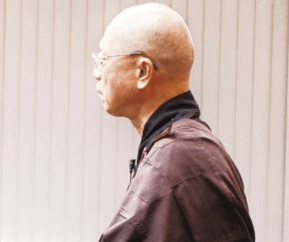
Who then, other than the Chinese Communist Party of course, would dare attack them?
Enter Xiao Pingshi, born Xiao Xieren in 1944 into a Buddhist farming family in Changhua, Taiwan. After his military service, he moved to Taipei and started a law firm.
In 1985, he dedicated himself completely to Buddhism, studying and practicing several methods for five years, until, according to TEPA’s website, he achieved enlightenment. In September 1997, he founded the True Enlightenment Practitioners Association (TEPA) in Taipei.
(Xiao Pingshi per TEPA https://www.enlighten.org.tw/master-pingsxiao)
Since the 1950s, most of the various Buddhist branches and schools have generally adopted a diplomatic and collaborative approach toward each other. Xiao Pingshi—a prolific author of over 200 books on Buddhism—is an exception.
In Collected Doctrinal Critiques of the True Enlightenment Practitioners Association, Xiao called the practice of Chan Buddhism as taught by Dharma Drum Mountain a “false dharma,” and derided Fo Guang Shan’s brand of humanistic Buddhism as “worldly,” “superficial,” and “pseudo-Buddhism.” These are two of the largest and most influential Buddhist organizations in Taiwan.
TEPA publications assert that only Xiao Pingshi teaches the true dharma. Comments in online Buddhist forums have described TEPA as a closed doctrinal system that delegitimizes all other paths. His critics basically say: Who does he think he is, Buddha?
In 2003, the Tibet Religious Foundation of His Holiness the Dalai Lama—the Tibetan government-in-exile’s representative office in Taiwan—accused the group of spreading communist propaganda against Tibetan Buddhism, which TEPA denied, plausibly: the group has since been banned in China.
The vast majority of Taiwanese were oblivious to all this, and if they had been aware, would likely have laughed it off as mere theological squabbling.
But things started to heat up when TEPA’s criticisms directly targeted the Dalai Lama himself when he visited Taiwan in the wake of Typhoon Morakot.
The deadliest cyclone in Taiwan’s recorded history, Morakot slammed into southern Taiwan on August 7, 2009, causing 677 confirmed deaths, with 474 people killed by a landslide in Xiaolin Village, in a rural area of Kaohsiung.
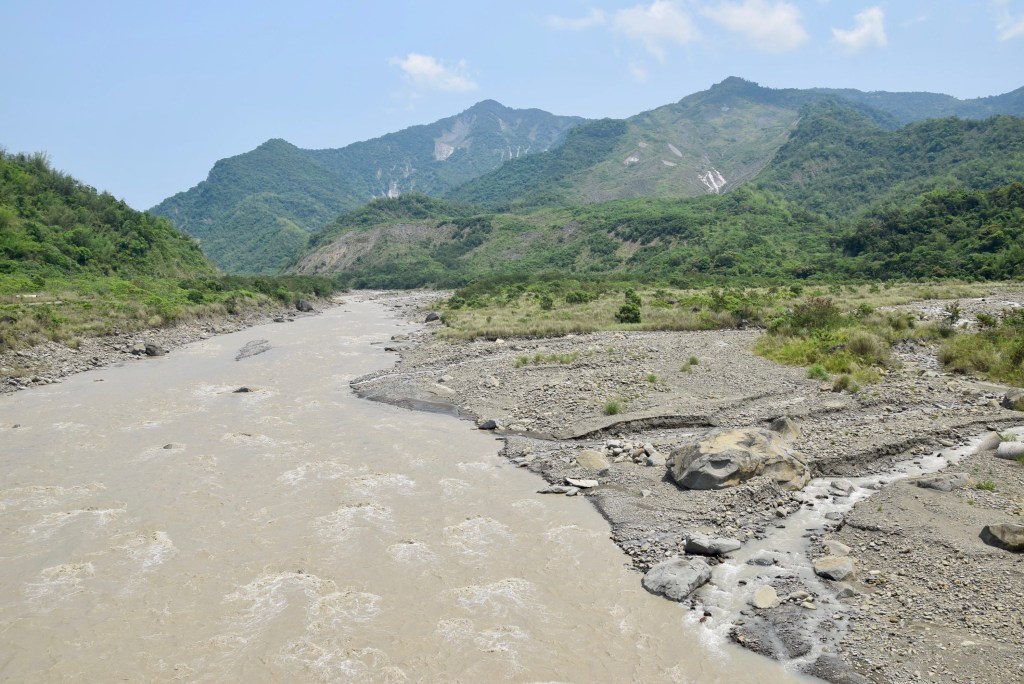
Photo by bellenion – Own work, CC BY-SA 4.0, https://commons.wikimedia.org/w/index.php?curid=65358043
The Tibetan leader visited later that month to say prayers and offer spiritual comfort to those affected. Most Taiwanese appreciated the gesture, especially those in the storm-ravaged south.
But as he conducted his prayer meetings, TEPA members were distributing leaflets in Taipei and Kaohsiung accusing him of promoting “tantric sex,” “false dharma,” and “demonic teachings.” TEPA also accused him of using his visit to Taiwan as a hypocritical attempt to rake in donations.
In November, 2010, the signs appeared on TEPA’s building on Chengde Road. Locals in the neighborhood were at first shocked, thinking they were promoting rather than warning against sexual practices in Buddhism.
But a community outreach program—and a warning to the building management committee not to take the signs down or face legal action—meant that they stayed up. Taipei City took no official action against TEPA.
In 2012, however, the Taipei District Court found Xiao Pingshi guilty of defamation for his 2009 comments against the Dalai Lama, and he was sentenced to 55 days in jail, convertible to a fine.
(Buddhist News World blog article https://blog.udn.com/acewang3005/6875237)
After losing an appeal to the supreme court, TEPA was forced to make an official “clarification”—not an apology, they insist—but have carried on with their anti-Tibetan-Buddhism polemics to this day.
Hot Yoga
So, what exactly is Xiao Pingshi’s problem with Tibetan Buddhism?
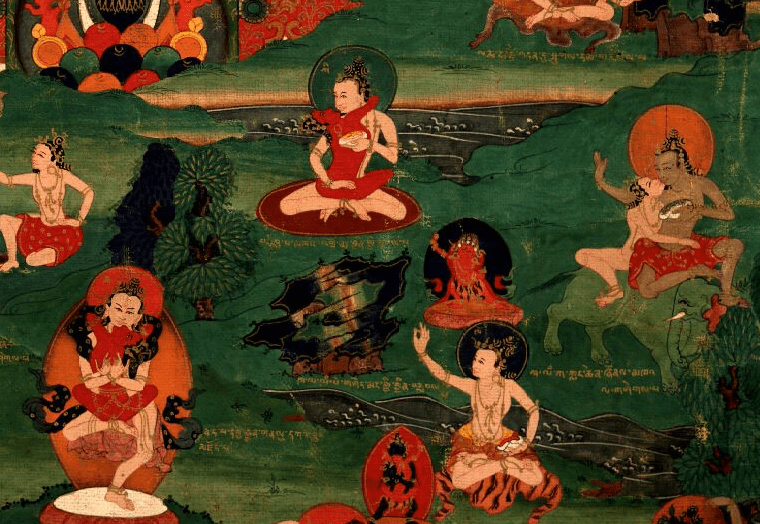
By Gelug Lineage – http://www.himalayanart.org/image.cfm/972.html
https://commons.wikimedia.org/w/index.php?curid=94466703
The core issue is the inclusion of tantric practices. Tantrism originated in medieval India, and its infusion into Buddhism produced the form of Tantric Buddhism known as Vajrayana, prevalent in Mongolia, Bhutan, and Tibet.
It includes elements such as mantras and mandalas, intended to alter consciousness and offer a faster path to enlightenment. But It also has a sexy side.
Yab-yum (literally “father-mother” in Tibetan) is a visual representation of a male deity in union with his female consort. It symbolizes the union of female (symbolizing wisdom) and male (symbolizing compassion and skill), a foundational concept of tantrism.
Karmamudra refers to a tantric technique involving sexual yoga with a consort, either physical or visualized. It can be considered the physical embodiment of the yab-yum ideal, where the practitioner uses desire as a path to spiritual realization, not for erotic pleasure. (Hmm…)
The practice is to be done only by advanced practitioners, who are supposed to avoid normal orgasm, especially ejaculation.
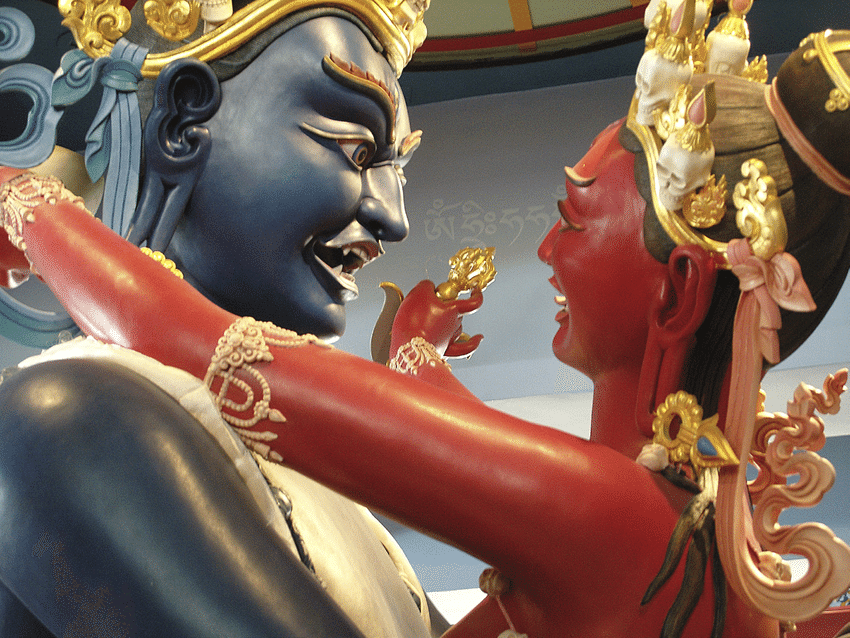
Photograph by Greg Smith.
https://creativecommons.org/licenses/by/4.0/
For Xiao Pingshi and TEPA, the inclusion of tantric sexual practice totally disqualifies Tibetan Buddhism as a legitimate form of Buddhism.
Kristen, a member of TEPA’s English team, told me over cakes and coffee in the TEPA HQ’s basement lounge: “If they didn’t call themselves Buddhist, we wouldn’t comment on them.”
Lily, a dharma teacher for TEPA, made the point: “The teacher and disciple face each other naked. Are we to believe they don’t have sex?”
Even for those willing to accept Tantric Buddhism, ethics would require that the practices be consensual. As it turns out, this was far too often not the case.
Creepy Holy Men
It is well known that over the last few decades, investigations by media and NGOs have exposed numerous sex abuse cases in religious organizations. The Catholic Church is the most notorious for this.
On a smaller scale, similar revelations have emerged within other religious groups, including the Anglican Church, certain evangelical Christian denominations, Orthodox Jewish communities, Islamic madrasas, the Jehovah’s Witnesses, the Sikh community, and with some Hindu gurus.
Within the worldwide Buddhist community, it is the Tibetan Buddhists that have been most rocked by sexual scandals.
Here are just a few major examples:
Osel Tendzin and Vajradhatu
Osel Tendzin, real name Thomas Rich, (1943 – 1990), was the first Western dharma heir of Tibetan Buddhist master Chogyam Trungpa, himself known for alcohol use and sexual activity with students.
Osel Tendzin led a school in California called Vajradhatu, the precursor to Shambhala International, after Trungpa’s death in 1987.
Tendzin knowingly engaged in unprotected sex with male students while HIV-positive, without disclosing his status. At least one student died from AIDS-related complications.
The community was deeply shaken, especially as senior leaders were reportedly aware of the situation but failed to intervene.
(Tendzin’s obituary: https://www.latimes.com/archives/la-xpm-1990-08-27-mn-27-story.html)
Sogyal Rinpoche and Rigpa
Sogyal Rinpoche (1947–2019) was the founder of Rigpa, a global network of Tibetan Buddhist centers.
He gained prominence through his book The Tibetan Book of Living and Dying, widely read in the West.

By Lotsawa108
https://commons.wikimedia.org/wiki/File:SR_for_wiki_(cropped).jpg
Accusations of sexual, physical, and emotional abuse spanned decades, with reports dating back to the 1970s. A 1994 lawsuit, which was settled out of court, alleged manipulation and assault under the guise of spiritual instruction.
In 2017, eight senior Rigpa students published an open letter detailing systemic abuse and manipulation, allegations confirmed by an independent report commissioned by Rigpa.
Senior Rigpa members were aware of misconduct and failed to act, wishing to avoid reputational damage to their leader and school.
In such cases, students are often afraid to report abusive gurus pushing unwanted sexual activity as “spiritual instruction” because of samaya, or sacred vows of secrecy. Breaking samaya is seen as spiritually catastrophic. Basically, if you rat on your guru, you go to hell—literally.
(Linked below is a powerful 2022 documentary about the abuse at Rigpa and the process of getting accountability.)
Speak No Evil
So where should we look for ethical guidelines for Tibetan Buddhist teachers, safeguards for disciples, and accountability for abusers? How about the Dalai Lama, whose spiritual authority and global profile would ensure that the message rang out, loud and clear.
By 2018, the sex scandals were damaging the reputation of Tibetan Buddhism, so the Dalai Lama began to speak out. But what said wasn’t always very reassuring.
One statement he made that year concerned an incident in which a group of 22 Western Buddhists had met with him in Dharamsala in 1993. They had raised concerns about sexual misconduct in Buddhism. But the Dalai Lama reported that: “I already did know these things, nothing new.”
So, he had known about the problem since before 1993, but had made no powerful public statements or undertaken any initiatives to deal with the issue until 2018.
That same year, in the Netherlands, he met with victims and simply stated that “religious leaders should pay more attention.”
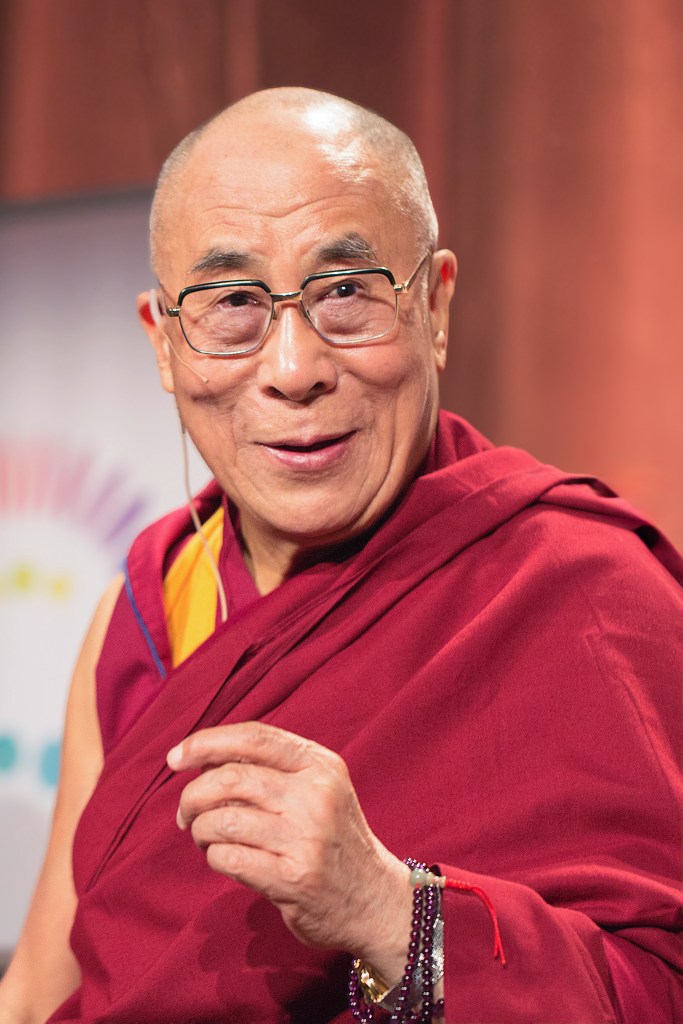
By Christopher Michel – Own work, CC BY-SA 4.0, https://commons.wikimedia.org/w/index.php?curid=168573481
In addition, to date, investigative reporting and documentaries such as German media outlet DW’s Buddhism and Abuse – The Unspeakable Truth highlight that the Central Tibetan Administration (CTA), remained “stubbornly silent” despite known cases of abuse.
In 2020, the CTA adopted a series of measures to counter sexual and gender-based violence While substantial, these were aimed at the Tibetan community in India and not at Tibetan Buddhist centers abroad.
The cat is out of the bag, however, and many Western Tibetan Buddhist centers have implemented reforms, such as safeguards, reporting systems, and psychological counseling.
A very Western sense of transparency and accountability seems to have enlightened Tibetan Buddhism in dealing with some nasty holdovers from their feudal mountain kingdom.
Concluding Opinion
So, is Xiao Pingshi right about Tibetan Buddhism? In the author’s opinion, No and Yes:
“No” in that this problem is not limited by any means to Tibetan Buddhists, while TEPA’s harshest polemics are.
In the Theravada (think “old school”) Buddhism, sexual abuse of young novices by senior monks has been reported many times in monasteries in Sri Lanka and Thailand.
(Article: Alarm Bells Sounded Over Child Abuse in Thailand’s Buddhist Temples – Buddhistdoor Global)
(Ph.D. Thesis: https://repository.canterbury.ac.uk/item/953w8/breaking-the-silence-about-institutional-child-abuse-in-sri-lanka)
And in the world of American Zen, here is one of several examples: Eido Tai Shimano, a Zen abbot who taught at the New York Zendo and upstate Dai Bosatsu Monastery, was accused of decades of sexual misconduct with female students, including coercive relationships and abuse of power.
But “yes” because the intimacy and power imbalance of the guru-disciple relationship within Tibetan Buddhism, combined with tantric practices, can be an incubator for sexual abuse. It makes it more likely to happen, and harder to report.
Fortunately, there have been are no publicly recorded cases of sexual abuse to date within Taiwan’s large and growing Tibetan Buddhist community, consisting of some 300 Tibetan monks and 250,000 Taiwanese adherents.
One reason for this could be that most of the monks come through for short stays on rotation, limiting the development of close relationships with students.
But it is also possible that TEPA’s anti-Tibetan-Buddhist signs did actually save some vulnerable women from abuse.
Religious leaders and teachers are merely human, after all. The trouble starts when we forget this.
NOTE: The author contacted the Tibet Religious Foundation of His Holiness the Dalai Lama with a request for an interview, and also offered the organization an opportunity to respond to the points in the article or add an official statement to be included therein. However, the organization has so-far not offered any official comment. If they do so in the future, the article will be edited to reflect this.

 The Culture Shack
.jpg)