

Version 2.0 of Resilience Roadmap: An Emergency Preparedness Guide to Expats in Taiwan is now ready for sharing.
Updates have been made to the following areas: The section on fires now covers dealing with toxic smoke. Material about evacuating buildings in an emergency now contains more information on using self-rescue devices. The pages covering radio communications and water purification have been improved, and the analysis of factors related to war in the Taiwan Strait has been updated with more recent concepts and information. Additionally, there have been many other small additions, corrections, and edits.
Unfortunately, this guide is as relevant today as it was when Version 1.0 was released in December 23. Since then, much has happened that is relevant to our preparedness for disasters and emergencies here in Taiwan. Below is a brief summary.
Earthquakes: In the 7.4 magnitude, April 3, 2024 Hualien Earthquake, the strongest since the 1999 Jiji Earthquake, at least 19 people were killed, and over 1,100 injured. Video footage of thousands of small rocks—and some giant boulders—raining down on roads with cars on them was one of the indelible images from that event.
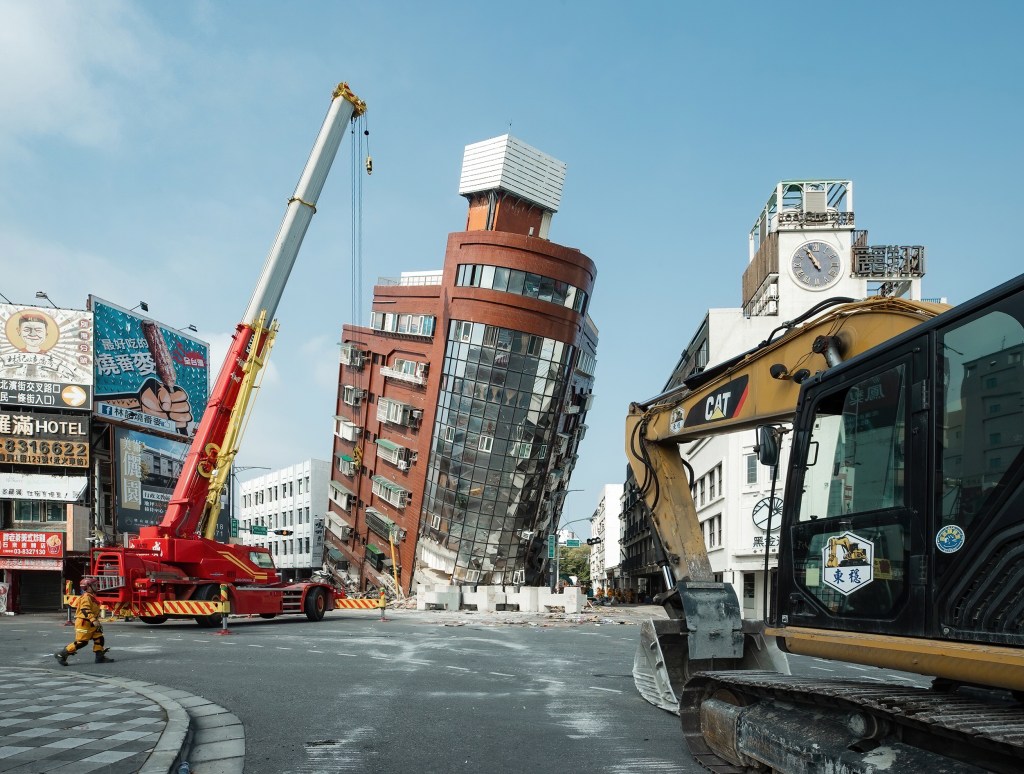
Photo by Shufu Liu , Office of the President
Fires: There were two major fire-related events in Taiwan in the 15 months between V1.0 and V2.0, both in Taichung. A major fire on December 19, 2024 at a PX Mart processing center under construction killed 9 and injured 5. There was also a dramatic downtown, day-time gas explosion on February 13, 2025, at a Shin Kong Mitsukoshi department store under renovation, which killed 5 and injured 4.
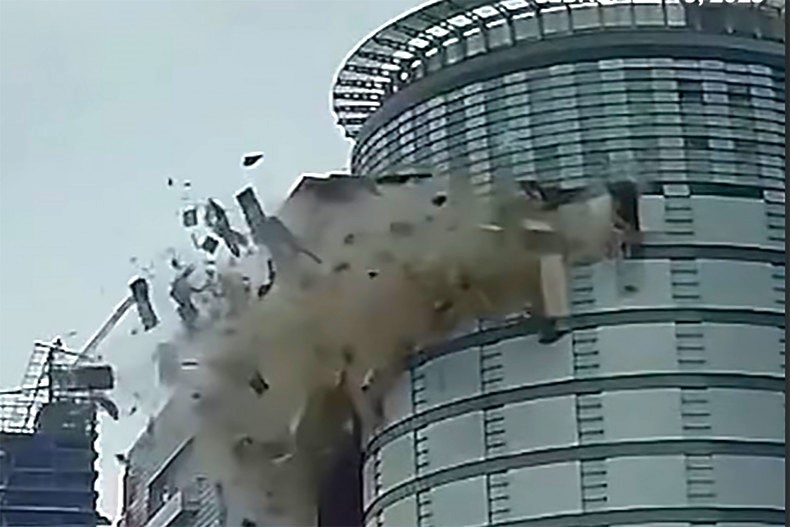
Typhoons: Taiwan saw three typhoon landfalls in 2024, Gaemi, Krathon, Kong-rey. That was the most direct hits in a year since 2008, with two in October being a historical first. There was a total of 14 deaths and 835 injuries.
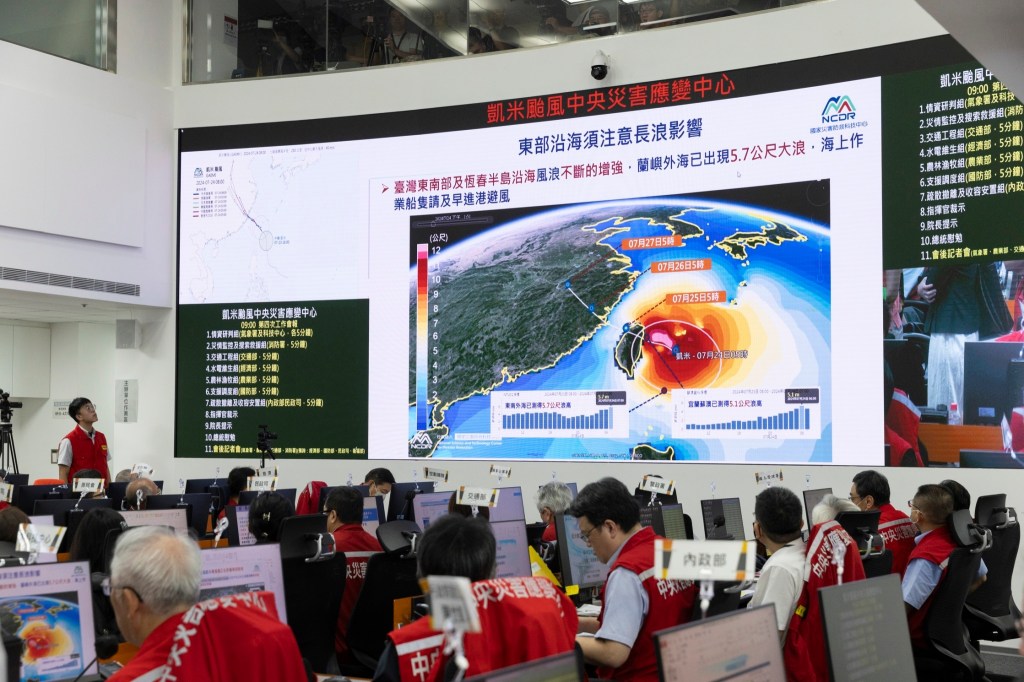
By 總統府
Disaster and emergencies are still fairly rare but they do happen and we need to be prepared. It is in that spirit that we share this updated version of Resilience Roadmap.
(More about the threat of war below the downloadable file and e-book links.)
Below is the free PDF e-book for download.
For those who like e-books, you can download this work in standard EPUB format for free from Flickerwell, an independent e-book publisher. Other EPUB versions (Amazon Kindle, Apple Books, Google Play Books, and Rakuten Kobo) are also linked from there.
LINK: https://flickerwell.com/ebooks/p/resilience-roadmap

THE THREAT OF WAR
In terms of geopolitical security for Taiwan, 2024 was an eventful year as well.
On May 20, 2024, William Lai Ching-te from the Democratic Progressive Party (DPP) was inaugurated as President of the Republic of China, Taiwan. Lai is someone that the Chinese Communist Party brands as a separatist, so it was no surprise that they responded with large-scale military exercises intimidatingly close to Taiwan, as well as an increase in “grey zone” warfare tactics.

The exercises were named Joint Sword-2024A, on May 23-24—just after Lai’s inauguration—and Joint Sword-2024B, October 14—just after his Double 10 Day (Taiwan’s national day) speech. These were “multi-domain coordination and joint strike capability exercises” involving the People’s Liberation Army’s (PLA) ground forces, air force (PLAAF), navy (PLAN), and rocket force (PLARF), and for the first time in such exercises, the China Coast Guard (CCG). A further set of naval and air force exercises were held from December 9-12, 2024. Although these were unnamed, the fact that they were focused on attacking or denying entry to foreign shipping made their saber-rattling message very clear.
(As I wrote these words on February 26, there were reports of a set of sudden, unannounced live-fire exercises some 40 nautical miles southwest of Kaohsiung.)
Initially these new-form, upscaled exercises were interpreted as a sign of the CCP’s anger at Taiwan’s supposed independentist provocations, such as when Speaker of the U.S. House of Representatives Nancy Pelosi visited Taiwan in August, 2022. However, it now seems more likely that the CCP/PLA were happy to have an excuse to practice blockading the island, perhaps as a prelude to a possible invasion. These events are also a way to normalize military activity around Taiwan, so that if and when the they do decide to strike, they can pivot suddenly from exercise to attack, in the hope of catching local defenders and foreign allies unawares.
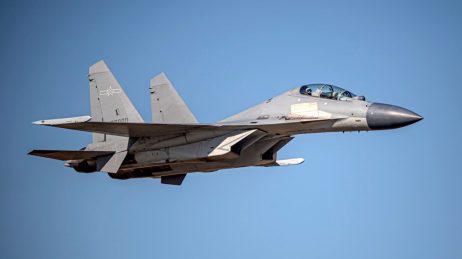
While the exercises are flare ups in tension, they are set against the chronic harassment of “grey zone” warfare—hostile actions that fall short of open aggression—in the form of aerial and naval incursions, designed to wear down Taiwan’s military and gain intelligence about its response capabilities. They have been increasing in frequency, scale, and complexity. In 2024, there were 3,069 military aircraft incursions across the median line of the Taiwan Strait —an increase from 1,703 in 2023.2023. In addition, there has been an increase in PLAN ships circling the island, aggressive posturing by CCG vessels, the suspected cutting of underwater internet cables to both the Matsu Islands and Penghu Islands in the Taiwan Strait, and other provocations.
On the political home front, Lai (and supporters of a free and democratic Taiwan) have other headaches as well: a coalition between the Kuomintang (KMT) and the Taiwan People’s Party (TPP), who won an effective majority in Taiwan’s Legislative Yuan in the January 2024 elections. As soon as the new legislative session began, they instantly embarked on an aggressive campaign of major bills that seem intent on disrupting the balance of power in their favor, weakening the executive branch. For example, they voted to change the allocation of tax revenue between the central and local governments from the longstanding 75-25% respective split back to the pre-1999 60-40%. This will make funding, and hence delivery, of central government services (including health care and defense) much harder. Surprisingly, they did this without adding any new responsibilities to the local governments, many of which are KMT-controlled. What’s more, the coalition also cut the central government’s proposed budget by 7%. The effect of both these financial changes comes at a time when boosting military spending could be essential to maintaining U.S. security support in the Trump era.
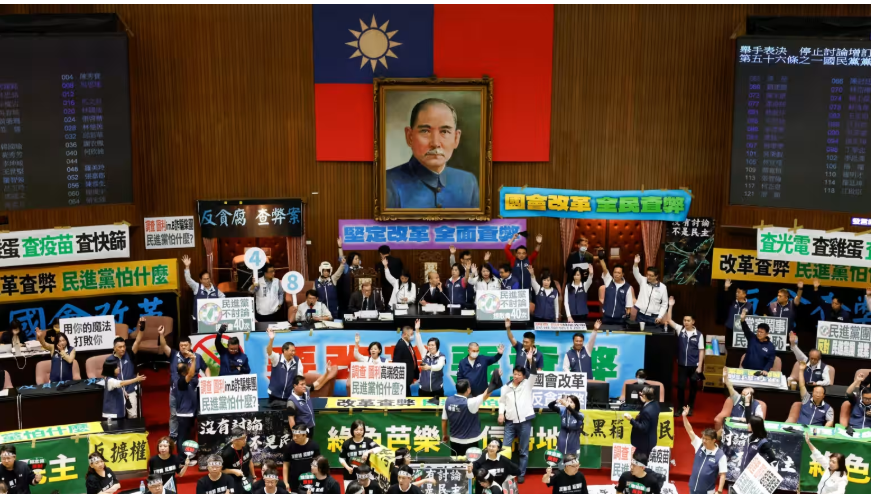
The radical new bills have triggered a “recall war”, in which both parties, but mainly the DPP, are using grass-roots methods to try and get members of the opposing party recalled from the legislature.
Many DPP supporters believe that leading KMT and TPP members are cooperating with the CCP in a form of political warfare to sabotage Lai’s government and Taiwan’s national defense. However, even if one takes the view of this being simply politics as usual, there is no doubt that the divisive in-fighting undermines Taiwan’s social unity, not to mention its capacity to enhance defenses in the hope of dissuading Chinese military action. Whether these radical lawmakers are fellow-travelers or useful idiots for the CCP, the effect is largely the same: a weaker Taiwan and an emboldened CCP.
In summary, Taiwan’s security as a free and democratic society faces multiple serious challenges. Of that, we should have no illusions.
————————————————————————————————————-

 The Culture Shack